
How to Read Vegan Food Labels UK: A Plain English Guide to What Everything Actually Means

Food labels in the UK are designed to meet legal requirements, not to make vegan shopping easy. The result is a patchwork of symbols, phrases, and ingredient names that mean different things on different products — and occasionally nothing at all. This guide cuts through all the noise.
Here’s where Vegan Supermarket UK comes in — it’s an online vegan shopping centre that brings together multiple shops, giving you the best chance of finding products that are both vegan and cruelty-free in one place.
Knowing how to read labels properly means less time in the shopping aisles and more confidence in what you’re actually buying.
The Quickest Check: Positive Vegan Labelling
The fastest way to confirm a product is vegan is to find one of these on the packaging:
The Vegan Society sunflower logo — the most widely recognised vegan certification in the UK. Products carrying this have been independently verified.
“Suitable for vegans” — a direct brand statement. Self-declared rather than certified, but perfectly acceptable when it appears on packaging.
“Vegan friendly” — The word “vegan” is actually a trademark of The Vegan Society, but brands can use vegan and/or vegan friendly without formal certification.
If any of these appear clearly on the specific product you’re looking at, then that’s all you need when you’re doing a food shop.
Symbols That Don’t Mean Vegan
This is where it gets confusing.
V symbol — sometimes used for both vegan and vegetarian depending on the brand. Never reliable on its own. Always check what the V actually means on that specific product.
VE or Ve — intended by some brands to mean vegan, used by others to mean vegetarian. Not standardised. Check the wording on the packaging if present, or assume vegetarian until confirmed otherwise.
Green leaf symbols — generally indicate organic, natural, or environmentally certified. It’s not a vegan marking. Ignore for vegan purposes.
Vegetarian Society seedling symbol — confirms vegetarian, not vegan. Products with this symbol may still contain milk, eggs, or honey.
“Plant-based” — a marketing term with no regulated definition. It does not mean vegan. A plant-based product can still contain animal-derived ingredients.
Reading the Ingredient List
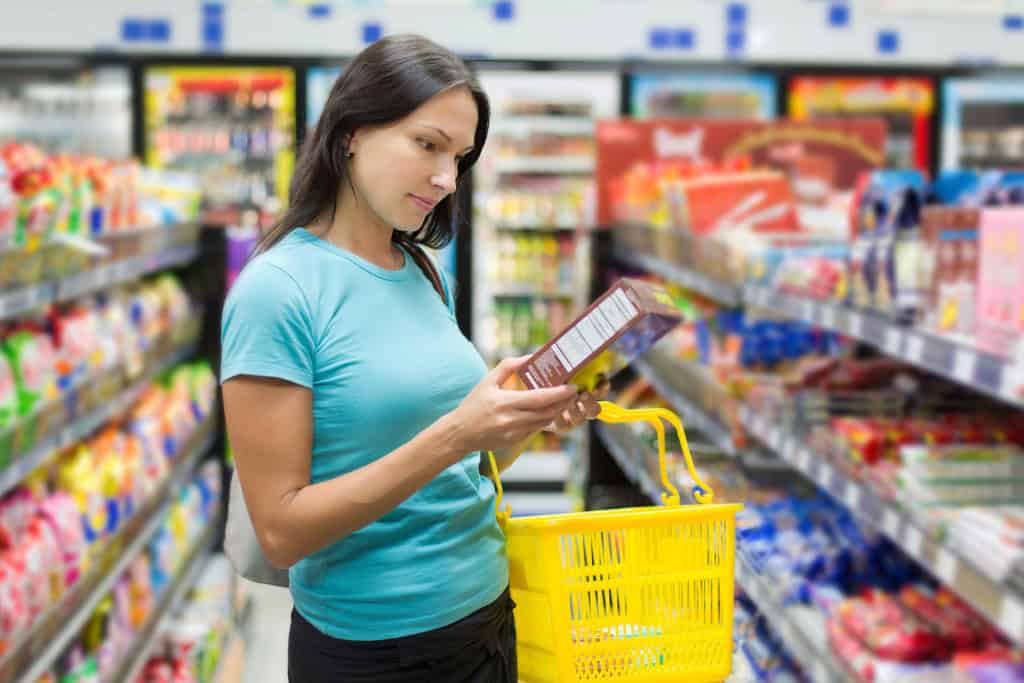
If there’s no explicit vegan labelling, the ingredient list is your next check. Here’s what to look for.
Obviously non-vegan ingredients — milk, eggs, butter, cream, cheese, honey, meat, fish, gelatin. These will usually be highlighted in bold as allergens (milk and eggs are among the major allergens required to be declared under UK law).
Less obvious non-vegan ingredients:
Gelatine — derived from animal bones and skin. Found in sweets, jellies, yoghurts, capsule medications, and some desserts.
Casein and whey — milk proteins. Found in some breads, protein powders, crisps, and processed foods. Often listed as “milk protein” or “whey protein.”
Lactose — milk sugar. Found in some medications, processed foods, and crisps.
Isinglass — derived from fish swim bladders. Used as a fining agent to clarify some beers and wines. It won’t appear on ingredient lists — you’d need to check with the brand.
Albumen — egg white. Used in some wines and baked goods. May be listed as “egg white” or “albumen.”
Carmine / E120 — red pigment from crushed insects. Found in some fruit juices, sweets, yoghurts, and red-coloured products.
Shellac / E904 — resin secreted by lac insects. Used as a coating on some sweets and fruit.
E441 — gelatine. Used in some food products as a gelling agent.
E542 — bone phosphate. Used as an anti-caking agent in some powdered foods.
E631, E635 — flavour enhancers that may be derived from meat or fish. Found in some savoury snacks and instant noodles.
Beeswax / E901 — used as a glazing agent on some confectionery and fruit.
Royal jelly, propolis — bee-derived. Found in some health supplements and honey products.
Understanding Allergen Labelling
UK food law requires major allergens to be declared on packaging, with milk, eggs, fish, and crustaceans among them. These are highlighted in bold in the ingredient list.
This helps vegan shoppers but doesn’t replace vegan checking. Allergen labelling catches the obvious animal ingredients. It won’t catch gelatine, carmine, isinglass, or other non-allergen animal derivatives. You’d still need to read the full ingredient list.
“May Contain” Statements
“May contain milk,” “may contain egg,” or similar warnings refer to cross-contamination risks in shared manufacturing environments — not intentional ingredients.
A product can carry a “may contain milk” warning and still be vegan. The warning is aimed at people with allergies, for whom even trace amounts matter. For vegan purposes, what matters is whether the ingredient is intentionally included — and “may contain” means it isn’t.
“Free From” Labelling
Free from ranges are generally designed for people with allergies or intolerances.
Dairy-free means no milk-derived ingredients — but a dairy-free product can still contain eggs, honey, or other animal-derived ingredients.
Gluten-free tells you nothing about vegan status.
Egg-free tells you nothing beyond the absence of eggs.
Free from labelling is a starting point, not a shortcut. Always check for explicit vegan labelling rather than assuming free from equals vegan.
Organic and Natural Claims
Organic means the product was produced without certain synthetic pesticides, fertilisers, or GMOs. It says nothing about whether it contains animal-derived ingredients.
Natural refers to the origin of ingredients — not to the absence of animal products. Natural ingredients include animal-derived ones.
Neither claim has any indication of vegan status. Always look for explicit vegan labelling.
Common Mistakes
Assuming vegetarian means almost vegan Vegetarian means no meat. Vegan means no animal products at all. Milk, eggs, and honey are all vegetarian but not vegan. A vegetarian label tells you nothing about vegan suitability.
Stopping at allergen checking Allergen labelling in bold catches milk, eggs, fish, and shellfish. It won’t catch gelatine, carmine, isinglass, shellac, or other animal derivatives. You still need to scan the full ingredient list.
Trusting “V” symbols without checking The V symbol means different things on different products. Always check whether it means vegan or vegetarian on the specific product you’re looking at.
Not checking variant by variant A vegan product range doesn’t mean every product in it is vegan. Flavours, sizes, and formats can vary. Check the specific product rather than assuming the whole range qualifies.
Giving up when an ingredient list is unclear If you encounter an ingredient whose vegan status isn’t clear from the name alone — certain E-numbers, fatty acids, flavourings — the brand’s website or a quick search of a vegan ingredient reference will usually give you an answer.
FAQ
What’s the most reliable vegan label to look for on UK food products?
The Vegan Society sunflower logo is the most widely recognised independently verified certification. “Suitable for vegans” is the most common brand statement and is perfectly acceptable. Between the two, the Vegan Society logo involves external verification; “suitable for vegans” is self-declared.
Are E-numbers vegan?
Most are, but some are not. The main ones to watch for are E120 (carmine — from insects), E441 (gelatine — from animals), E542 (bone phosphate), E631 and E635 (may be from meat or fish), E901 (beeswax), and E904 (shellac — from insects). Most other E-numbers are either plant-derived, synthetic, or mineral.
Does “dairy-free” mean vegan?
No. Dairy-free means no milk-derived ingredients. A dairy-free product can still contain eggs, honey, gelatine, or other animal-derived ingredients. Always look for explicit vegan labelling rather than inferring from dairy-free.
Is wine and beer vegan?
Not always. Some wines and beers are clarified using animal-derived fining agents like isinglass (from fish), gelatine, or egg albumen. These don’t appear in ingredient lists. Look for wines and beers labelled as vegan, or check Barnivore for the vegan status of specific alcoholic drinks.
What should I do if I can’t work out whether an ingredient is vegan?
Check the brand’s website first — most brands that have a vegan policy state it clearly. If the ingredient itself is unclear, a vegan ingredient reference or a quick search of its name alongside “vegan” will usually give you an answer. If you still can’t confirm, treat the product as uncertain and find an alternative with clearer labelling.
Some links on this site may be affiliate links. Product information is for guidance only — always check ingredients, allergens, and suitability before purchase.
This content is for general informational purposes only and is not intended as medical advice. Always check product labels and consult a qualified professional if you have a medical condition or concerns.