

Where to Buy Vegan Running Shoes in the UK

Finding running shoes that are genuinely fully vegan — not just synthetic on the outside — is harder than it should be. Most major sportswear brands don’t always label their running shoes by vegan status, which means you’re left deciphering materials lists and hoping the description covers all the components that really matter to you.
That’s where Vegan Supermarket UK comes in — it’s an online vegan shopping centre that brings together multiple shops, giving you the best chance of finding products that are both vegan and cruelty-free in one place.
Comparing vegan credentials across multiple sportswear retailers takes time, particularly when labelling is inconsistent — having verified options gathered together makes the whole process a lot easier.
How People Shop
Most people start with the brands they already know and try to find a cruelty-free running shoe within their existing range. The problem is that mainstream running shoe brands don’t always show vegan status clearly — you’re usually cross-referencing a materials list across upper, lining, insole, midsole, and outsole, and the information isn’t always complete. What a palaver!
Searching specifically for vegan running trainers from specialist vegan or ethical footwear retailers tends to produce more reliable results with less effort.
When comparing options, performance is naturally the primary concern alongside ethics. Cushioning, support, breathability, and weight all matter for running — and the good news is that modern running shoe construction already leans heavily on synthetic materials, so many performance running shoes are animal-free by design rather than by specific intention. The gap between vegan and non-vegan running shoes is narrower here than in dress footwear.
How to Narrow Your Options
By running type
Vegan road running shoes prioritise cushioning, responsiveness, and durability on hard surfaces. Trail running shoes need grippier outsoles and more protective uppers. Gym and cross-training shoes require lateral support and a flatter sole profile. Identifying what you need before comparing options saves loads of time.
By materials and construction
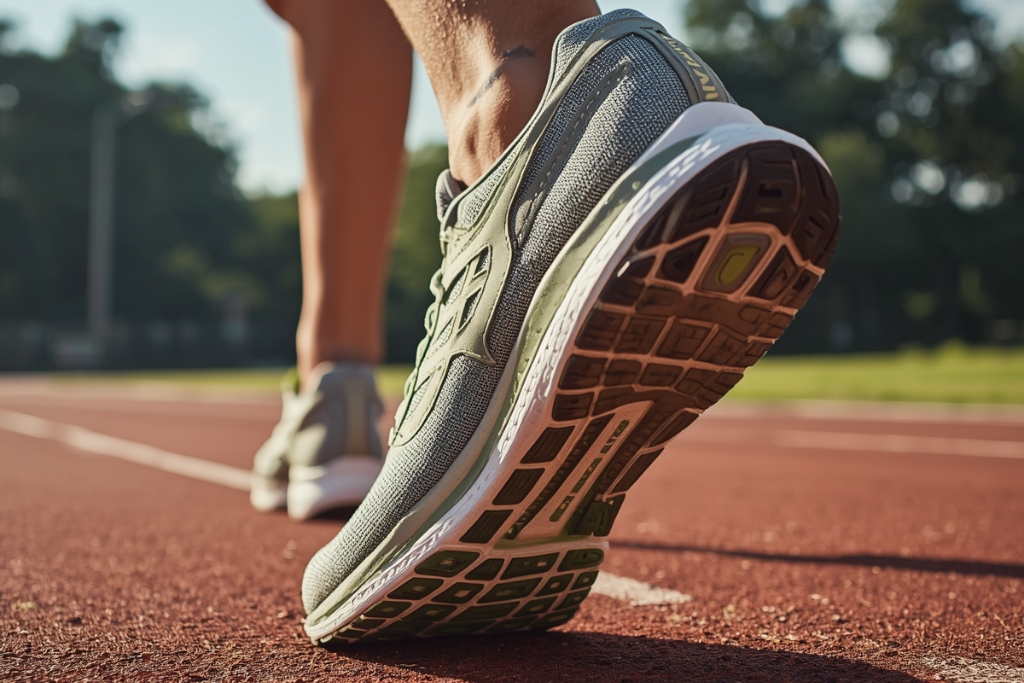
Modern high-performance running shoes typically use synthetic mesh uppers, synthetic foam midsoles, and rubber outsoles — all of which are generally animal-free. The components most likely to contain animal-derived materials are the insole (sometimes leather-lined) and any suede or leather overlays used for structure or branding. Check these specifically rather than assuming the whole of the shoe is vegan.
By fit and support needs
This applies to any running shoe but is worth emphasising for animal-free sports footwear specifically: A vegan shoe that doesn’t support your gait correctly could cause injury. Neutral, stability, and motion-control options exist across the vegan running shoe market — identify which you need before narrowing by brand or retailer.
By budget
Quality vegan athletic shoes start from around £60 to £70 for everyday training. Performance-focused options with more advanced cushioning technology typically sit between £100 and £160. Race-day shoes with carbon plates and premium foam are available at the top end, and vegan options exist at this level too.
Where People Actually Buy
Specialist vegan footwear retailers carry a good range of running and sports shoes with confirmed vegan status across all shoes — the verification work has already been done for you. Ethical fashion marketplaces with sports ranges are also worth checking, particularly for brands that sit at the junction of performance and sustainability.
General sportswear retailers carry many running shoes that just happen to be fully vegan, but identifying them requires a bit of individual product research. Mainstream running specialists — both online and in-store — can sometimes advise on vegan options if you ask directly, though the quality of the support can vary a fair bit.
What to Check Before Buying
All components, not just the upper
Synthetic mesh uppers are almost always animal-free, but check the insole sock liner, any structural overlays, and the lacing. Some insoles use leather or suede; some overlays use suede for reinforcement at high-wear areas like the toe or heel. These little details really do matter.
Midsole and outsole materials
Foam midsoles (EVA, TPU, and proprietary compounds) are synthetic and animal-free. Rubber outsoles are generally animal-free, though some traditional rubber compounds use casein (a milk protein) as a processing aid — this is pretty rare to be honest, in modern running shoes but worth checking if you’re buying from a brand without a clear vegan policy.
Cruelty-free status
Vegan materials and cruelty-free production are distinct. Most mainstream running shoe manufacturers don’t test on animals, but if this matters to you, do check the brand’s stated policy rather than assuming.
Common Mistakes
Assuming all synthetic running shoes are fully vegan.
Synthetic uppers are the norm in running shoes, but animal-derived materials can still appear in insoles, overlays, and occasionally in adhesives or processing compounds. Always check all the parts, not just the upper.
Not checking whether specialist vegan running shoes are available in your size and width.
The range of vegan running shoes is extensive but not infinite. If you have specific fit requirements — wide fitting, extended sizes, orthotics-friendly depth — check availability before committing to a retailer.
By the way, what the heck is Orthotics-friendly? Well it refers to the vertical internal volume of a shoe required to accommodate a custom or over-the-counter insole without crowding out your foot. Standard shoes lack this space, but extra-depth footwear generally adds more vertical room.
Label Education:
Vegan fashion means no animal-derived materials are used at any point in the product. For running shoes specifically, here is what to check.
What makes a running shoe non-vegan
Animal-derived materials can appear in leather or suede overlays and heel reinforcements, leather-lined insoles or sock liners, wool blend linings in winter or trail running models, and occasionally in adhesives or rubber processing compounds.
Vegan alternatives
Fully vegan running shoes use synthetic mesh or knit uppers, foam or synthetic fabric sock liners, rubber or synthetic outsoles, and synthetic adhesives. Recycled materials — recycled polyester, recycled rubber — are increasingly common and are generally animal-free.
What to check on the label
UK footwear labels must state materials for the upper, lining, and outer sole. For running shoes, also check the product description for insole and overlay details — these are often where animal-derived materials appear but aren’t always shown on the label. If in doubt, ask the shopkeeper before you buy.
Simple rule: If the full materials list isn’t clearly animal-free across every component, treat it as uncertain.
FAQ
Are most running shoes already vegan?
Many are, because modern running shoe construction relies heavily on synthetic materials. But not all — and the vegan status isn’t always clearly labelled. Insoles, overlays, and some adhesives can introduce animal-derived materials even in otherwise synthetic shoes. Always check at component level rather than assuming.
Do vegan running shoes perform as well as non-vegan ones?
Yes. Performance running shoe technology — foam compounds, knit uppers, rubber outsoles — is almost entirely synthetic by nature. The performance gap between vegan and non-vegan running shoes is effectively zero at most price points, because the highest-performing materials just happen to be animal-free. Yay!
Can I find vegan trail running shoes as well as road shoes?
Yes, though the range is slightly narrower than for road running. Trail shoes require more robust construction and sometimes incorporate suede or leather overlays for durability — check these specifically. Fully vegan trail running options exist and perform well; they just require slightly more careful checking than road shoes.
What should I look for in a vegan running shoe insole?
Look for insoles described as foam, synthetic fabric, or recycled material. Avoid insoles described as leather-lined or suede-covered. If the insole description isn’t given in the product listing, contact the retailer — a reputable vegan footwear retailer should be able to confirm this immediately.
Is recycled material in running shoes always vegan?
Mostly — recycled polyester, recycled rubber, and other recycled synthetic materials are animal-free. Recycled content is increasingly common in running shoes and is both vegan and environmentally preferable to virgin synthetic materials.