
Vegan Catalogue UK: How to Browse and Buy Vegan Products Without the Guesswork

Finding vegan products shouldn’t feel like a research project. But without a clear place to browse — something that works like a proper vegan catalogue rather than a scatter of products buried across dozens of websites — it often does.
That’s where Vegan Supermarket UK comes in — an online vegan shopping centre that brings together multiple shops, giving you the best chance of finding products that are both vegan and cruelty-free in one place.
Comparing options across multiple shops takes time, particularly when labelling varies and not every retailer makes vegan products easy to find.
How People Approach This
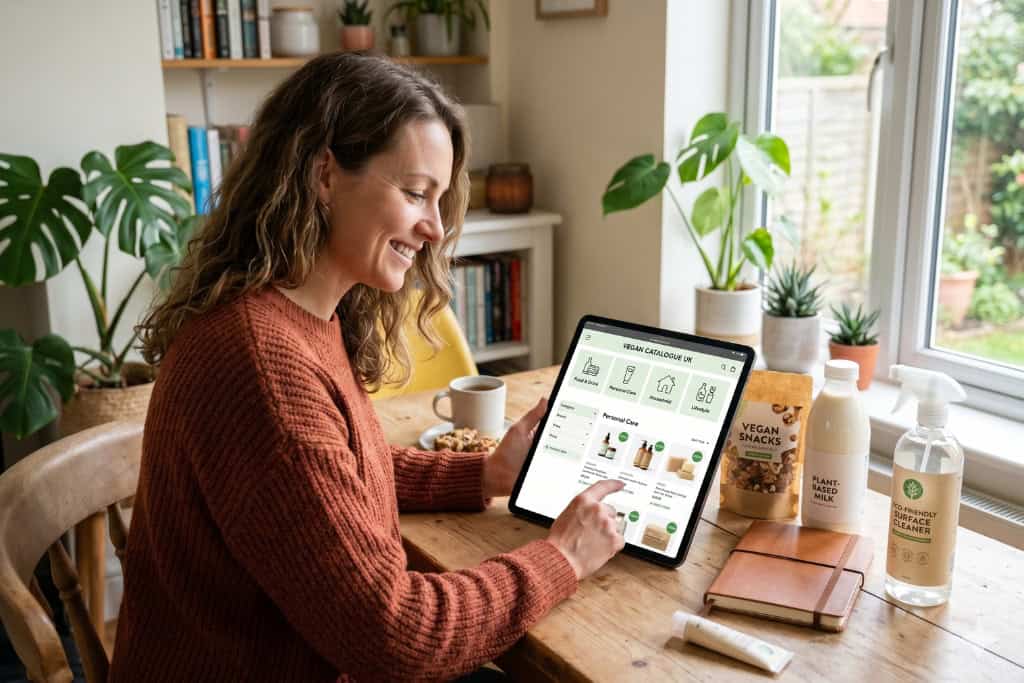
Most people start by searching for specific products rather than browsing a range. That works up to a point — but it means you only ever find what you already know to look for. A good vegan product catalogue changes that by letting you browse by category, discover new products, and compare options without starting from scratch each time.
The other challenge is trust. Knowing that what you’re looking at has been curated with vegan and cruelty-free standards in mind — rather than a general retailer that happens to stock some vegan lines — makes the whole process faster and less stressful.
Most people use a combination: a reliable browsable source for discovery, and direct brand or retailer sites for repeat purchases once they’ve found what works.
How to Narrow Your Options
By category
A vegan catalogue worth using covers more than food. Look for one that spans grocery, personal care, household products, and lifestyle — so you’re not switching between sources depending on what you need. The more categories in one place, the less time you spend repeating the same search elsewhere.
By what you’re trying to solve
Some people are browsing to discover new products. Others are switching an existing product for a vegan version and want a direct replacement. And some are building a fully vegan household from scratch and need everything at once. Each of these calls for a slightly different approach to how you browse.
By budget
Vegan products span a wide price range. Everyday staples are competitively priced; specialist or artisan products cost more. A good catalogue lets you filter or browse by type so you can find options at the right price point rather than landing on premium products when affordable ones exist.
Where People Actually Browse Vegan Products
Dedicated online vegan platforms
These are the closest thing to a true vegan catalogue. Everything is curated with vegan standards in mind, products are grouped by category, and you’re not having to filter out non-vegan results. The range varies by platform, but the browsing experience is significantly easier than a general retailer.
Individual brand websites
Once you’ve found brands you trust, their own websites are worth bookmarking. You’ll often find the fullest range there, along with clearer information about their vegan and cruelty-free credentials. The downside is having to visit each one separately.
Online marketplaces
Marketplaces carry a huge range of vegan products, but they require more filtering and label-checking. Vegan status isn’t always verified at platform level, so you’re reliant on product listings being accurate — which sometimes they’re not.
Health food and specialist retailers
Both online and in person, health food retailers tend to have a higher concentration of vegan products than mainstream shops. They’re not always fully vegan, but the filtering work is considerably less.
What to Check Before Buying
Vegan status
A product labelled vegan contains no animal-derived ingredients. Look for “suitable for vegans,” “vegan friendly,” or the Vegan Society trademark. Don’t assume a product is vegan because it appears in a vegan-leaning catalogue — always check the individual product.
Cruelty-free status
For personal care and household products, cruelty-free certification is another thing you should look out for, in addition to the vegan/vegan friendly logo. A product can be vegan without being cruelty-free. Look for Leaping Bunny or PETA Cruelty-Free logos where relevant. Certification processes cost money, and smaller brands don’t always have the budget to go through the formal process. If a brand clearly states they’re vegan and cruelty-free, that’s good enough — you don’t need a logo to prove it.
Ingredients
Even in a curated vegan catalogue, it’s worth checking ingredients on anything new. Formulations change, and what was vegan last year may not be now. This is especially relevant for food and cosmetics.
Format and size
Particularly for food and personal care, vegan status can vary across a product range by flavour, shade, or size. Check the specific product you’re buying rather than assuming the whole range qualifies.
Product Labelling: What the Terms Actually Mean
Product labelling can sometimes be confusing. Here is a short guide to the terms you will most commonly see.
Vegan A product labelled vegan contains no animal-derived ingredients. The word “vegan” is a trademark owned by The Vegan Society, though many brands use phrases such as “vegan friendly” or “suitable for vegans.” In practice these mean the same thing.
Vegan and vegetarian symbols Packaging sometimes uses symbols such as V, VE, or Vegan. These are not always used consistently — in some cases “Ve” may indicate vegetarian rather than vegan. Vegetarian products may still contain milk, eggs, or honey. It is worth checking that the product clearly states vegan rather than vegetarian.
“May contain” allergy statements Some vegan products may still include warnings such as “may contain milk” or “may contain egg” due to shared manufacturing environments. This does not mean these ingredients are intentionally included.
Cruelty-free Cruelty-free means the finished product and its ingredients were not tested on animals. Some brands display certification logos such as Leaping Bunny or PETA Cruelty-Free. Certification logos cost money, and smaller brands don’t always have the budget to go through the formal process. If a brand clearly states they’re vegan and cruelty-free, that’s good enough — you don’t need a logo to prove it.
China and animal testing Products sold in mainland China have historically been subject to animal testing requirements under certain conditions. Because of this, many organisations consider such products unlikely to meet typical cruelty-free standards.
Marketing claims to watch out for Phrases such as “natural,” “eco-friendly,” “high welfare,” or “RSPCA Assured” do not guarantee that a product is vegan or cruelty-free.
Simple rule: If a product is not clearly labelled vegan and cruelty-free, treat it as uncertain.
Common Mistakes
Treating plant-based as the same as vegan Plant-based usually refers to diet, and even then it doesn’t always mean entirely free of animal ingredients. Vegan means no animal products across all categories. A plant-based label on a product doesn’t make it vegan — check the full ingredient list.
Browsing a general retailer and assuming the vegan filter is reliable Many mainstream retailers have added vegan filters, but these depend on brands correctly self-tagging their products. Mistakes happen. A dedicated vegan catalogue or platform reduces this risk because curation is the whole point.
Only browsing food A fully vegan lifestyle covers personal care, household cleaning products, and clothing as well as food. If you’re using a vegan catalogue to build a more consistent vegan shop, it’s worth looking across all categories rather than stopping at the grocery aisle.
Formulations and suppliers change. A product that was vegan when you first bought it may have changed since. It’s worth a quick check on anything you buy regularly, particularly food and cosmetics.
Assuming a big range means everything is verified The size of a catalogue and the effectiveness of its vegan verification are different things. Most platforms rely on brand verification.
FAQ
Is there a proper vegan catalogue in the UK?
Not in the traditional printed sense, but there are online platforms that function as one — bringing together vegan products across multiple categories in a browsable format. These are the most practical equivalent, and the range available online is significantly wider than anything you’d find in a printed catalogue anyway.
What’s the difference between a vegan catalogue and a vegan search engine?
A catalogue implies curation — products have been selected and organised by category, with some level of vegan verification. A search engine returns results based on what’s listed, with less control over accuracy. For vegan shopping, a curated catalogue is generally more reliable.
Can I find vegan products across all categories in one place?
Increasingly, yes. Dedicated vegan platforms now cover food, personal care, household products, and lifestyle items. The range varies, and you may still need to go to specialist sources for some categories — vegan fashion in particular — but the one-stop browsing experience has improved significantly.
Are vegan catalogues only useful for people who are already vegan?
Not at all. They’re genuinely useful for anyone looking to live a kinder, more ethical lifestyle, or managing a mixed household, or simply trying to make more considered choices without spending hours researching. You don’t need to be fully vegan to find a curated vegan product range useful.
Some links on this site may be affiliate links. Product information is for guidance only — always check ingredients, allergens, and suitability before purchase.
This content is for general informational purposes only and is not intended as medical advice. Always check product labels and consult a qualified professional if you have a medical condition or concerns.