
How to Tell If a Product Is Vegan UK: A Practical Guide to Reading Labels

Telling whether a product is vegan should take seconds. In practice it can take considerably longer — particularly when labels use inconsistent symbols, marketing language obscures the actual ingredients, and “may contain” statements add another layer of uncertainty. This guide cuts through it.
That’s where Vegan Supermarket UK comes in — an online vegan shopping centre that brings together multiple shops, giving you the best chance of finding products that are both vegan and cruelty-free in one place.
Comparing options across multiple shops takes time, particularly when you’re having to verify each product from scratch.
How People Approach This
Most people start by looking for a logo or a “suitable for vegans” statement. That works when it’s there. The problem is that many vegan products aren’t explicitly labelled — and many non-vegan products use language that implies they might be.
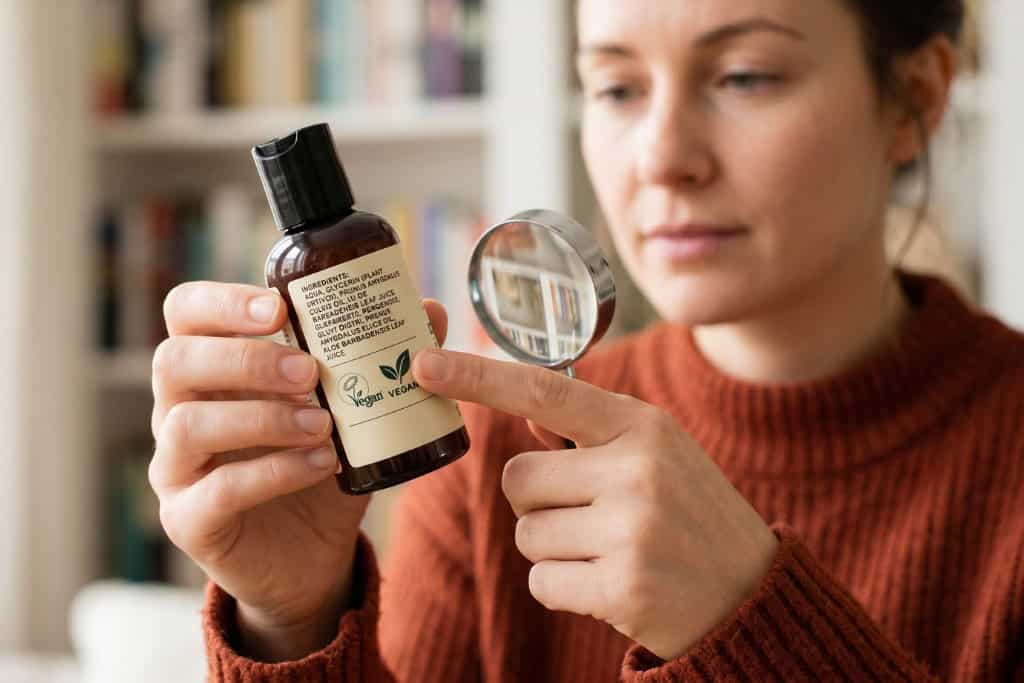
The reliable approach is a two-step check: first, look for positive vegan labelling; second, if it’s absent, check the ingredient list for animal-derived ingredients. Once you know what to look for, the second step becomes faster.
Different product categories have different things to watch for. Food has its own list of hidden animal derivatives. Cosmetics have theirs. Household products and clothing each have their own considerations. This guide covers all of them.
Step 1: Look for Explicit Vegan Labelling
The clearest signals that a product is vegan are:
The Vegan Society trademark — a sunflower logo. Products carrying this have been verified against The Vegan Society’s standard. It’s one of the most reliable signals available.
“Suitable for vegans” — a direct statement from the brand. Self-declared rather than independently certified, but a meaningful claim.
“Vegan friendly” or “vegan” — broadly reliable when used on packaging, though self-declared. The word “vegan” is a trademark of The Vegan Society, though this doesn’t prevent brands from using related phrases.
If any of these are present and clearly apply to the specific product (not just the brand in general), you have a strong signal that the product is vegan.
Step 2: Watch Out for Symbols That Don’t Mean Vegan
Not every symbol on packaging means what you might assume.
V symbol — sometimes used for vegan, sometimes for vegetarian. Don’t rely on it without checking what it means on that specific product or brand.
VE or Ve — intended by some brands to mean vegan, but used inconsistently. In some cases it indicates vegetarian.
Leaf or green symbols — often indicate organic, natural, or environmentally friendly. They do not indicate vegan.
Vegetarian Society symbol — a green seedling. This confirms vegetarian, not vegan. Vegetarian products can contain milk, eggs, and honey.
If in doubt about what a symbol means on a specific product, check the brand’s website rather than inferring.
Step 3: Check the Ingredient List
If there’s no explicit vegan labelling, the ingredient list is your next check. Here’s what to look for by category.
Food and drink — hidden animal derivatives to watch for:
- Gelatine (from animal bones and skin — found in sweets, jellies, yoghurts, capsules)
- Casein and whey (milk proteins — found in some breads, protein powders, crisps)
- Lactose (milk sugar — found in some medications and processed foods)
- Isinglass (fish-derived — used to filter some beers and wines)
- Albumen (egg white — used in some wines and baked goods)
- Honey, beeswax, royal jelly
- Carmine / E120 (red pigment from insects — found in some juices, sweets, yoghurts)
- E441 (gelatine), E542 (bone phosphate), E631, E635 (may be meat or fish-derived)
Cosmetics and personal care — hidden animal derivatives to watch for:
- Lanolin (from sheep’s wool — found in lip balms, moisturisers)
- Beeswax (found in lip products, mascaras, creams)
- Carmine (red pigment from insects — found in lipsticks, blushers)
- Collagen and elastin (often animal-derived — found in anti-ageing products)
- Keratin (from animal hair or feathers — found in hair treatments)
- Squalene (often shark-derived — found in moisturisers and serums)
- Glycerin (can be animal or plant-derived — check source if unlabelled)
Household products — hidden animal derivatives to watch for:
- Tallow (animal fat — used in some soaps and detergents)
- Casein (milk protein — used in some surface cleaners)
- Lanolin (found in some fabric conditioners)
- Beeswax (found in some polishes and wood treatments)
- Stearic acid (can be animal or plant-derived)
Clothing and accessories — animal-derived materials to watch for:
- Leather and suede (animal skin)
- Wool and cashmere (from sheep and goats)
- Silk (from silkworms)
- Down and feathers (from birds)
- Fur and angora (from various animals)
- Shell buttons and pearl accessories
- Check linings, insoles, and trims — not just the main fabric
Step 4: Understand “May Contain” Statements
“May contain milk” or “may contain egg” on a product doesn’t mean the product contains those ingredients. These statements refer to cross-contamination risk in shared manufacturing environments — where vegan and non-vegan products are made in the same facility.
A product can carry a “may contain milk” warning and still be vegan. These warnings are aimed at people with allergies and or intolerances, not vegans. The relevant question for vegan status is whether the ingredient is intentionally included — and “may contain” means it isn’t.
Step 5: When to Check the Brand’s Website
Some products don’t have room on their label for full ingredient transparency, or use ingredients whose origin isn’t clear from the name alone. In these cases, checking the brand’s website is the most reliable next step.
Look for a dedicated vegan or cruelty-free policy page. Reputable brands that meet these standards tend to be upfront about it. If a brand’s website has no information about vegan status despite being asked, that’s itself a signal.
For ingredients where the plant or animal origin varies by supplier — glycerin, stearic acid, oleic acid — the brand’s own sourcing policy is the only reliable way to confirm.
Product Labelling: What the Terms Actually Mean
Vegan A product labelled vegan contains no animal-derived ingredients. The word “vegan” is a trademark owned by The Vegan Society, though many brands use phrases such as “vegan friendly” or “suitable for vegans.” In practice these mean the same thing.
Vegan and vegetarian symbols Packaging sometimes uses symbols such as V, VE, or Vegan. These are not always used consistently — in some cases “Ve” may indicate vegetarian rather than vegan. Vegetarian products may still contain milk, eggs, or honey. It is worth checking that the product clearly states vegan rather than vegetarian.
“May contain” allergy statements Some vegan products may still include warnings such as “may contain milk” or “may contain egg” due to shared manufacturing environments. This does not mean these ingredients are intentionally included.
Cruelty-free Cruelty-free means the finished product and its ingredients were not tested on animals. Some brands display certification logos such as Leaping Bunny or PETA Cruelty-Free. Certification logos cost money, and smaller brands don’t always have the budget to go through the formal process. If a brand clearly states they’re vegan and cruelty-free, that’s good enough — you don’t need a logo to prove it.
China and animal testing Products sold in mainland China have historically been subject to animal testing requirements under certain conditions. Because of this, many organisations consider such products unlikely to meet typical cruelty-free standards.
Marketing claims to watch out for Phrases such as “natural,” “plant-based,” “eco-friendly,” or “clean” do not guarantee that a product is vegan or cruelty-free.
Simple rule: If a product is not clearly labelled vegan and cruelty-free, treat it as uncertain.
Common Mistakes
Assuming vegetarian means almost vegan Vegetarian means no meat. Vegan means no animal products at all. Milk, eggs, and honey are all vegetarian but not vegan. A vegetarian label tells you nothing about vegan suitability.
Trusting “natural” or “plant-based” as a vegan proxy Neither term has a regulated definition. A natural product can contain animal-derived ingredients. A plant-based product can too. Neither is a reliable shortcut for vegan.
Only checking the main ingredient In food, the main ingredient is usually obvious. The non-vegan ingredients are often in the additives, flavourings, or processing aids. In cosmetics, they’re often in the emollients or colourants. In clothing, they’re often in the lining or trim. Check the full list, not just the headline.
Not checking variant by variant A product range being vegan doesn’t mean every product in it is. Flavours, shades, and sizes can vary. Check the specific product you’re buying.
Giving up when labelling is unclear If a label is unclear, the brand’s website or a quick search of their vegan policy usually gives you an answer. Most brands that are genuinely vegan are happy to say so clearly.
FAQ
What is the quickest way to check if a food product is vegan?
Look for “suitable for vegans,” “vegan friendly,” or the Vegan Society sunflower logo. If none of these are present, check the ingredient list for the most common animal derivatives: milk, eggs, honey, gelatine, and carmine. If you’re unsure about a specific ingredient, check the brand’s website.
Does “dairy-free” mean vegan?
Not automatically. Dairy-free means no milk-derived ingredients, but a product can be dairy-free and still contain eggs, honey, gelatine, or other animal-derived ingredients. It’s not a substitute for a vegan label.
Are E-numbers vegan?
Most are, but some are not. E120 (carmine, from insects), E441 (gelatine), E542 (bone phosphate), and E631/E635 (may be meat or fish-derived) are the main ones to watch for. Most other E-numbers are either plant-derived, synthetic, or mineral.
How do I check if a cosmetic is vegan without spending ages on it?
Look for explicit vegan labelling or the Vegan Society trademark first. If absent, check the ingredient list for lanolin, beeswax, carmine, collagen, keratin, and squalene — these are the most common non-vegan ingredients in cosmetics. If the product is from a brand with a clear vegan policy on their website, you can usually trust that their labelled vegan products meet the standard.
Is wine and beer vegan?
Not always. Some wines and beers are filtered using isinglass (from fish), gelatine, or egg albumen. These processing aids don’t appear in the ingredient list, but they are used in production. Look for wines and beers labelled as vegan, or check a resource like Barnivore that lists the vegan status of alcoholic drinks.