
Is Cruelty-Free the Same as Vegan? The Difference Explained

Cruelty-free and vegan are not the same thing. A product can be cruelty-free but not vegan. A product can be vegan but not cruelty-free. Understanding the difference matters every time you buy something. eg: cosmetics, cleaning products, or personal care items.
That’s where Vegan Supermarket UK comes in — an online vegan shopping centre that brings together multiple shops, giving you the best chance of finding products that are both vegan and cruelty-free in one place.
Comparing options across multiple shops takes time, particularly when the language around cruelty-free and vegan is used inconsistently across brands and retailers.
What Cruelty-Free Actually Means
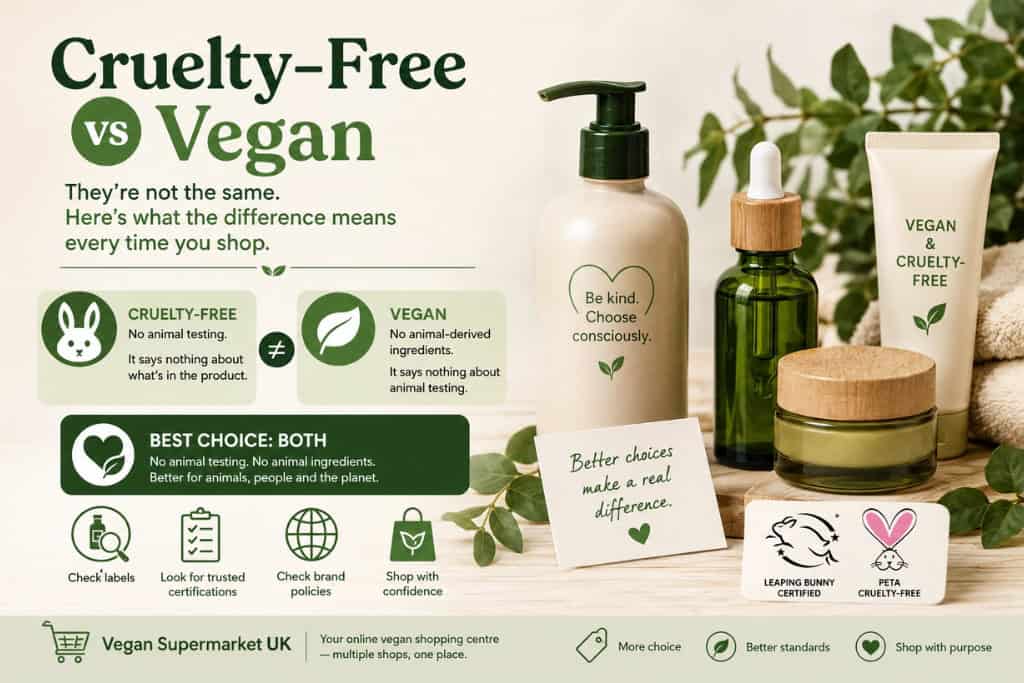
Cruelty-free means the product and its ingredients were not tested on animals. That’s it. It says nothing about what’s in the product.
A cruelty-free lipstick can still contain carmine — a red pigment made from crushed insects. A cruelty-free moisturiser can still contain lanolin — derived from sheep’s wool. A cruelty-free shampoo can still contain keratin — from animal hair or feathers.
Cruelty-free is about the testing process. Not the ingredients.
What Vegan Actually Means
Vegan means the product contains no animal-derived ingredients. That’s it. It says nothing about how the product or its ingredients were tested.
Vegan is about the ingredients. Not the testing process.
Where They Overlap — and Where They Don’t
Most people who care about one also care about the other. And in practice, many brands that are genuinely vegan are also cruelty-free. But the two standards are independent, and checking only one is not enough.
A product can be:
Cruelty-free but not vegan — no animal testing, but contains animal-derived ingredients like beeswax, lanolin, or carmine.
Vegan but not cruelty-free — no animal-derived ingredients, but tested on animals at some stage of development or sold in markets that require animal testing.
Both vegan and cruelty-free — no animal-derived ingredients and no animal testing. This is what most people are actually looking for.
Neither — contains animal-derived ingredients and was tested on animals.
How to Check for Both
For vegan status: Look for “suitable for vegans,” “vegan friendly,” or the Vegan Society trademark. Check the ingredient list for common animal-derived ingredients — lanolin, beeswax, carmine, collagen, keratin, squalene, glycerin (if source unstated).
For cruelty-free status: Look for Leaping Bunny or PETA Cruelty-Free certification logos. Check the brand’s website for their stated testing policy. Certification logos cost money, and smaller brands don’t always have the budget to go through the formal process. If a brand clearly states they’re vegan and cruelty-free, that’s good enough — you don’t need a logo to prove it.
The China question: Products sold in mainland China have historically been subject to mandatory animal testing requirements. Because of this, many organisations consider such products unlikely to meet cruelty-free standards — even if the brand claims cruelty-free status elsewhere. Some brands sell via cross-border e-commerce routes that bypass this requirement — check the brand’s own policy where this matters to you.
Product Labelling: What the Terms Actually Mean
Product labelling can sometimes be confusing. Here is a short guide to the terms you will most commonly see.
Vegan A product labelled vegan contains no animal-derived ingredients. The word “vegan” is a trademark owned by The Vegan Society, though many brands use phrases such as “vegan friendly” or “suitable for vegans.” In practice these mean the same thing.
Vegan and vegetarian symbols Packaging sometimes uses symbols such as V, VE, or Vegan. These are not always used consistently — in some cases “Ve” may indicate vegetarian rather than vegan. Vegetarian products may still contain milk, eggs, or honey. It is worth checking that the product clearly states vegan rather than vegetarian.
“May contain” allergy statements Some vegan products may still include warnings such as “may contain milk” or “may contain egg” due to shared manufacturing environments. This does not mean these ingredients are intentionally included.
Cruelty-free Cruelty-free means the finished product and its ingredients were not tested on animals. Some brands display certification logos such as Leaping Bunny or PETA Cruelty-Free. Certification logos cost money, and smaller brands don’t always have the budget to go through the formal verification and monitoring processes. If a brand clearly states they’re vegan and cruelty-free, that’s good enough.
China and animal testing Products sold in mainland China have historically been subject to animal testing requirements under certain conditions. Because of this, many organisations consider such products unlikely to meet typical cruelty-free standards.
Marketing claims to watch out for Phrases such as “natural,” “eco-friendly,” “botanical,” or “clean” do not guarantee that a product is vegan or cruelty-free.
Simple rule: If a product is not clearly labelled vegan and cruelty-free, treat it as uncertain.
Common Mistakes
Assuming cruelty-free means vegan The most common mistake. A cruelty-free product can still contain beeswax, lanolin, carmine, silk, or any number of other animal-derived ingredients. Always check vegan status separately.
Assuming vegan means cruelty-free Less common but equally wrong in the other direction. A vegan product can still have been tested on animals. If cruelty-free matters to you, check it specifically.
Trusting “natural” or “ethical” as a proxy for either Neither term has a regulated definition in product marketing. A natural product can contain animal-derived ingredients. An ethical brand can still test on animals or sell in markets that require it.
Only checking one standard when both matter Most people who care about cruelty-free also care about vegan — and vice versa. The two checks take the same amount of time. Do both, every time, rather than assuming one implies the other.
Not checking the China policy for brands you buy A brand can be genuinely cruelty-free in most markets but sell in mainland China under conditions that require animal testing. If this matters to you, check the brand’s policy specifically rather than assuming their general cruelty-free claim covers all markets.
FAQ
Can a product be cruelty-free but contain animal ingredients?
Yes. Cruelty-free refers to testing only — not ingredients. A product can carry a Leaping Bunny certification and still contain lanolin, beeswax, carmine, or other animal-derived ingredients. Always check vegan status separately.
Can a product be vegan but not cruelty-free?
Yes, though it’s less common. A product can contain no animal-derived ingredients but still have been tested on animals — either in its development, in its ingredient supply chain, or because it’s sold in markets that require animal testing. Always check cruelty-free status separately.
Which certification covers both vegan and cruelty-free?
No single certification covers both completely. The Vegan Society trademark covers vegan status. Leaping Bunny covers cruelty-free status including the ingredient supply chain. Some brands carry both certifications. Where neither is present, check the brand’s own stated policy for both standards.
Is “not tested on animals” the same as cruelty-free?
Not really. This is a minefield of misleading marketing blurb! Some brands apply this claim only to the finished product; others extend it to the ingredient supply chain as well. Leaping Bunny certification is more comprehensive because it covers both. A brand self-declaring “not tested on animals” without certification may need further checking.
Why do some vegan brands also test on animals?
Most don’t — but some sell in markets, particularly mainland China, where animal testing has been legally required under certain conditions. This means a brand can formulate vegan products while still being subject to animal testing requirements in specific markets. It’s a contradiction that many consumers find unacceptable, and it’s worth checking a brand’s China policy specifically if cruelty-free status matters to you.
Some links on this site may be affiliate links. Product information is for guidance only — always check ingredients, allergens, and suitability before purchase.
This content is for general informational purposes only and is not intended as medical advice. Always check product labels and consult a qualified professional if you have a medical condition or concerns.