
Vegan Gifts UK: How to Find Something Good Without Getting It Wrong

Vegan gift buying should be straightforward but it’s not. A box of chocolates with milk in it. A candle made with beeswax. A beauty set that’s “cruelty-free” but one with animal-derived ingredients. The gap between what looks like a vegan gift and what actually is one is wider than most people expect.
That’s where Vegan Supermarket UK comes in — an online vegan shopping centre that brings together multiple shops, giving you the best chance of finding products that are both vegan and cruelty-free in one place.
Comparing options across multiple shops takes time, particularly when “natural,” “ethical,” and “cruelty-free” are used so loosely in gift marketing.
How People Approach This
Most people approach vegan gift shopping the same way they’d approach any gift — starting with what your loved ones likes and start working from there. The difference is the additional verification step: making sure that what looks right, actually is right.
The trap most people fall into is treating the gift category as safe rather than checking individual products. Chocolate, candles, and beauty sets are the three most common sources of mistakes — all popular gift choices, all frequently non-vegan despite appearances.
The most reliable approach is either buying from a retailer that has done the vegan and cruelty free verification for you, or buying individual products you can check yourself and knowing what to look for when you do.
How to Narrow Your Options
By recipient
A good vegan gift starts with the person, not the category. Food and drink works for almost everyone. Skincare and beauty works for people who care about their routine. Home fragrance — candles, diffusers — works for people who care about their living space. Clothing and accessories work for people with strong personal style. Starting with what they actually like makes the gift better regardless of whether it’s vegan.
By occasion
Vegan gifts for birthdays, Christmas, anniversaries, and thank-yous don’t require dramatically different approaches — but occasion affects budget expectations and how personal you want to get. A birthday calls for something considered; a thank-you gift can be simpler. The vegan verification process is the same either way.
By budget
Vegan gifts at every price point exist and have improved considerably. Under £15: chocolate, candles, teas, bath products. £15–£40: skincare sets, food hampers, homeware, accessories. £40+: premium beauty, curated hampers, vegan fashion pieces, experiences. The range at the higher end has grown substantially — there’s no longer a compromise between vegan and impressive.
Where People Actually Buy Vegan Gifts
Dedicated vegan online retailers
The most reliable source. Everything is curated with vegan standards in mind, which removes the verification burden and lets you focus on finding something the recipient will like. Many offer gift wrapping or message options.
Independent vegan shops
Worth visiting if you have one nearby — particularly for food gifts, locally made items, and products you won’t find online. Staff knowledge is usually strong and they can often confirm cruelty-free status on the spot.
Vegan markets and gift fairs
A genuinely good source for original gifts, particularly in the run-up to Christmas. Independent makers sell directly, ranges are interesting, and everything is vegan by definition. Worth looking up what’s happening locally.
Ethical lifestyle retailers
These overlap significantly with vegan gifting. Not everything they stock is vegan, but the concentration of suitable products is higher than in mainstream retail, and the browsing experience is easier.
High street
Possible but you need patience. Gift sets need the most careful checking — one non-vegan item in a set of eight undermines the whole thing. Individual products are easier to verify.
What to Check Before Buying
Every item in a gift set individually
Gift sets are where most vegan gift mistakes happen. A set may contain products from different formulations, and vegan status can vary within a range. Check each product, not just the outer packaging.
Vegan status specifically
Natural, plant-based, organic, and eco don’t mean vegan. Look for the word “vegan” explicitly — either as a label, as the Vegan Society trademark, or as a clear statement from the brand. If none of those are present, treat it as uncertain.
Cruelty-free status for beauty and personal care gifts
Vegan and cruelty-free are separate standards. A cruelty-free beauty gift can still contain beeswax, lanolin, or carmine. If you want both — and most people giving vegan gifts do — check both. Look for Leaping Bunny or PETA Cruelty-Free logos. Certification logos cost money, and smaller brands don’t always have the budget to go through the formal process. If a brand clearly states they’re vegan and cruelty-free, that’s good enough — you don’t need a logo to prove it.
Candles specifically
Candles are one of the most common vegan gift mistakes. Many — including premium and “natural” ones — are made with beeswax or contain animal-derived fragrance ingredients. Look for soy, coconut, or rapeseed wax and check that the fragrance is also vegan.
Product Labelling: What the Terms Actually Mean
Product labelling can sometimes be confusing. Here is a short guide to the terms you will most commonly see.
Vegan A product labelled vegan contains no animal-derived ingredients. The word “vegan” is a trademark owned by The Vegan Society, though many brands use phrases such as “vegan friendly” or “suitable for vegans.” In practice these mean the same thing.
Vegan and vegetarian symbols Packaging sometimes uses symbols such as V, VE, or Vegan. These are not always used consistently — in some cases “Ve” may indicate vegetarian rather than vegan. Vegetarian products may still contain milk, eggs, or honey. It is worth checking that the product clearly states vegan rather than vegetarian.
“May contain” allergy statements Some vegan products may still include warnings such as “may contain milk” or “may contain egg” due to shared manufacturing environments. This does not mean these ingredients are intentionally included.
Cruelty-free Cruelty-free means the finished product and its ingredients were not tested on animals. Some brands display certification logos such as Leaping Bunny or PETA Cruelty-Free. Certification logos cost money, and smaller brands don’t always have the budget to go through the formal process. If a brand clearly states they’re vegan and cruelty-free, that’s good enough — you don’t need a logo to prove it.
China and animal testing Products sold in mainland China have historically been subject to animal testing requirements under certain conditions. Because of this, many organisations consider such products unlikely to meet typical cruelty-free standards.
Marketing claims to watch out for Phrases such as “natural,” “botanical,” “eco,” or “ethically sourced” do not guarantee that a product is vegan or cruelty-free.
Simple rule: If a product is not clearly labelled vegan and cruelty-free, treat it as uncertain.
Common Mistakes
Assuming dark chocolate is vegan Dark chocolate is not automatically dairy-free or vegan. Many dark chocolate products contain milk or are produced alongside dairy products. Always check the label specifically for vegan status.
Buying cruelty-free and thinking that’s enough Cruelty-free means no animal testing. It says nothing about ingredients. A cruelty-free gift set can still contain animal-derived ingredients. Both standards need to be checked separately.
Trusting the branding over the label Minimalist packaging, sustainability messaging, and clean beauty claims are marketing, not guarantees. Go by what the label actually says.
Not checking candles and home fragrance Easy to overlook. Beeswax candles and some diffuser formulations use animal-derived ingredients. Always check specifically rather than assuming home fragrance products are vegan by default.
Conflating vegetarian with vegan Vegetarian means no meat. Vegan means no animal products. A vegetarian gift box can still contain milk chocolate, honey, or egg-based products. They are not the same standard.
FAQ
What are the most reliable vegan gift categories?
Food from dedicated vegan confectioners or food brands, soy or plant-wax candles, skincare from verified vegan and cruelty-free brands, and homeware are generally the most reliable categories because they’re easier to verify. Clothing and accessories are reliable if you buy from dedicated vegan fashion brands.
Is vegan gift shopping more expensive than regular gift shopping?
Not necessarily. The range of vegan gifts at mainstream price points has grown considerably. You’re unlikely to pay a premium for vegan chocolate, candles, or basic skincare. Premium vegan gifts — artisan hampers, high-end beauty, vegan fashion — do carry higher prices, but that’s true of premium gifts in general.
How do I find vegan gifts for someone who isn’t vegan?
Focus on what they’d enjoy regardless. Good food, something that smells nice, something useful for their home — these work for most people. The recipient doesn’t need to know or care that a gift is vegan for it to go down well. Vegan chocolate, candles, and skincare are all things people appreciate without thinking twice about the credentials.
Are pre-made vegan hampers reliable?
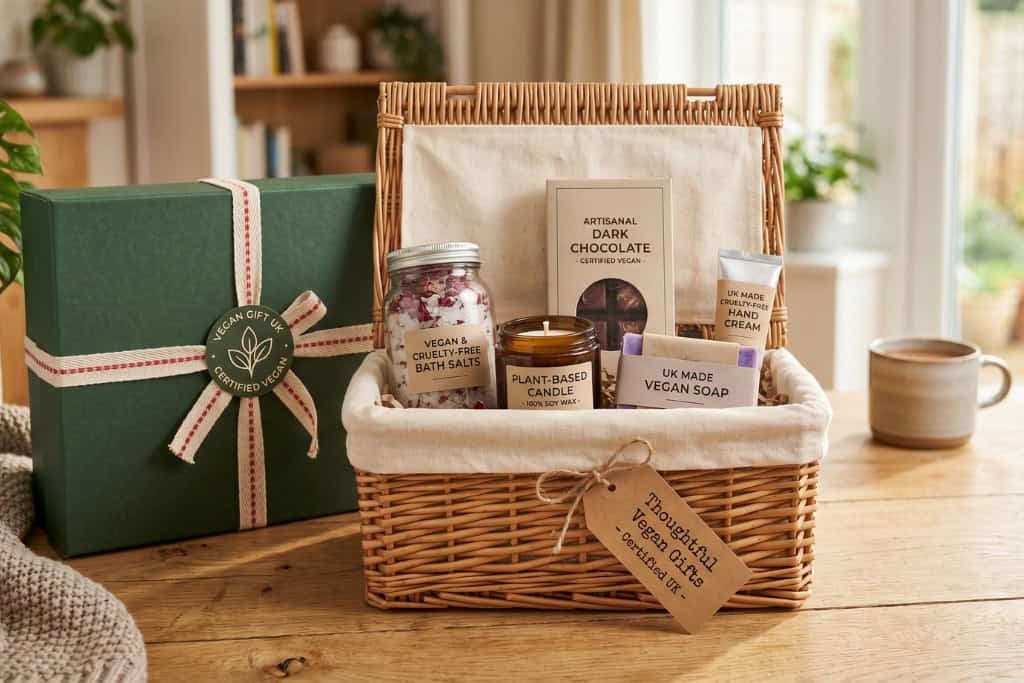
They can be, but check explicitly that the hamper has been curated to vegan standards rather than just labelled as vegan-friendly. The most reliable vegan hampers come from dedicated vegan retailers who have verified each item. For mainstream hampers with a vegan label, check individual items rather than trusting the set as a whole.
Where’s the best place to buy vegan gifts online in the UK?
Dedicated vegan retailers are the most reliable — everything they stock meets the standard, so you’re choosing based on what the recipient would like rather than spending time on verification. Multi-retailer vegan platforms are useful for comparing options across a wider range in one place.